
THE CARE JOURNAL
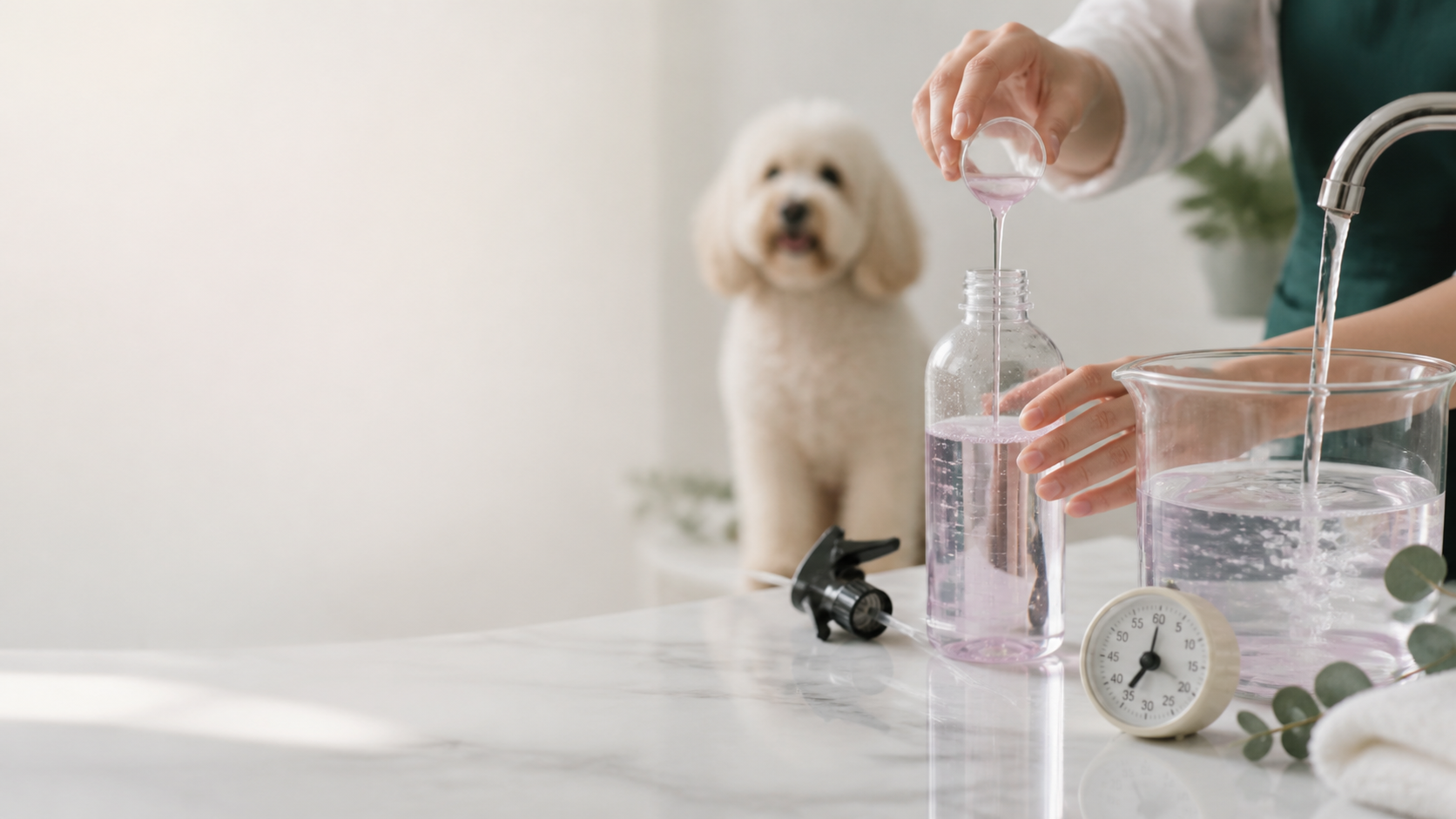
Pet shampoo dilution: product-to-water ratio or final dilution?
Define the ratio and the intended washing method before measuring. The arithmetic below is an illustration, not a product recommendation.Care illustration, not a clinical case or test result.
A label containing the number ten does not, on its own, tell you how much water to add. Read the exact wording for the product in hand, then confirm whether the directions apply to hand washing or a particular salon system.
Name the two quantities being compared
In a stated volume-parts teaching example, product:water of 1:10 means one part product plus ten parts water: eleven nominal parts altogether. A stated final preparation of ten times the product amount instead means one part product and nine parts water in the same model.
These are definitions, not recommended dilutions for Timentall or any other product. Actual directions may use volume, mass or another convention. Adding volume parts is a teaching model; a precise final volume follows the specified measuring or make-up method.
Keep four details with the mixing record
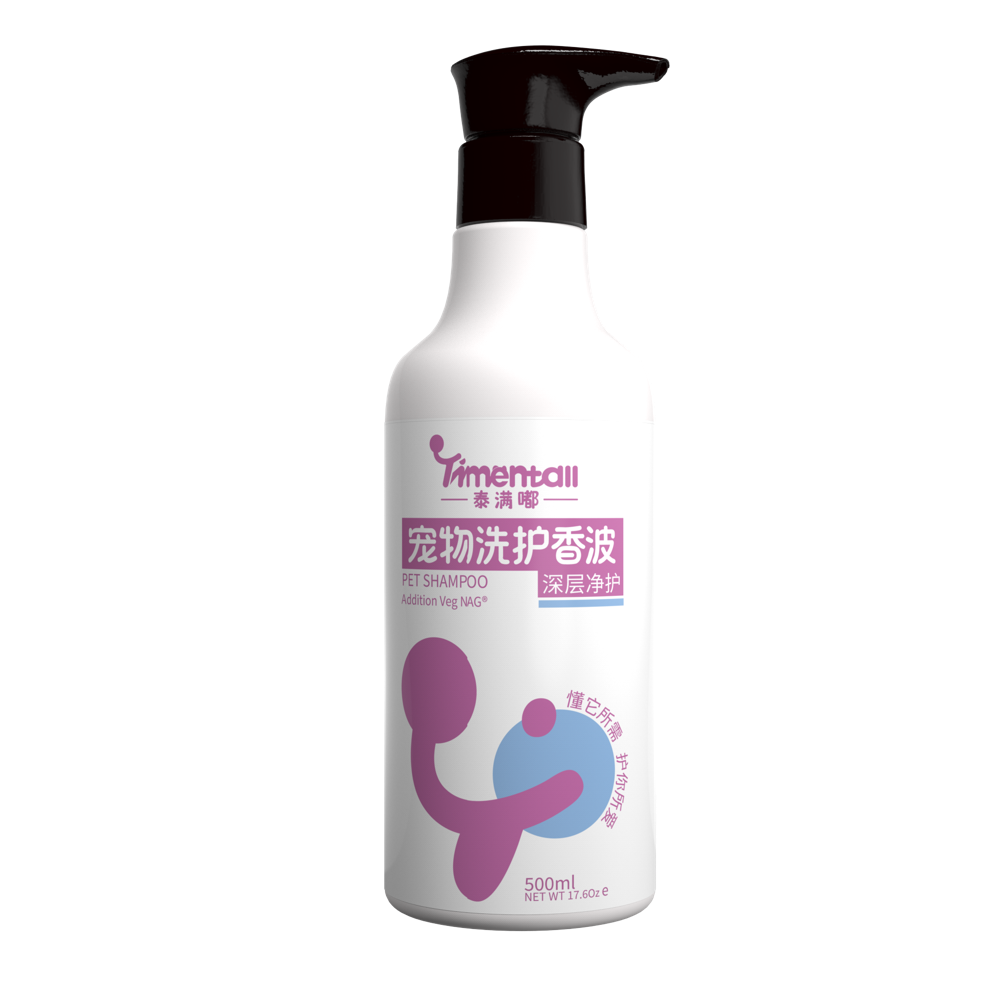
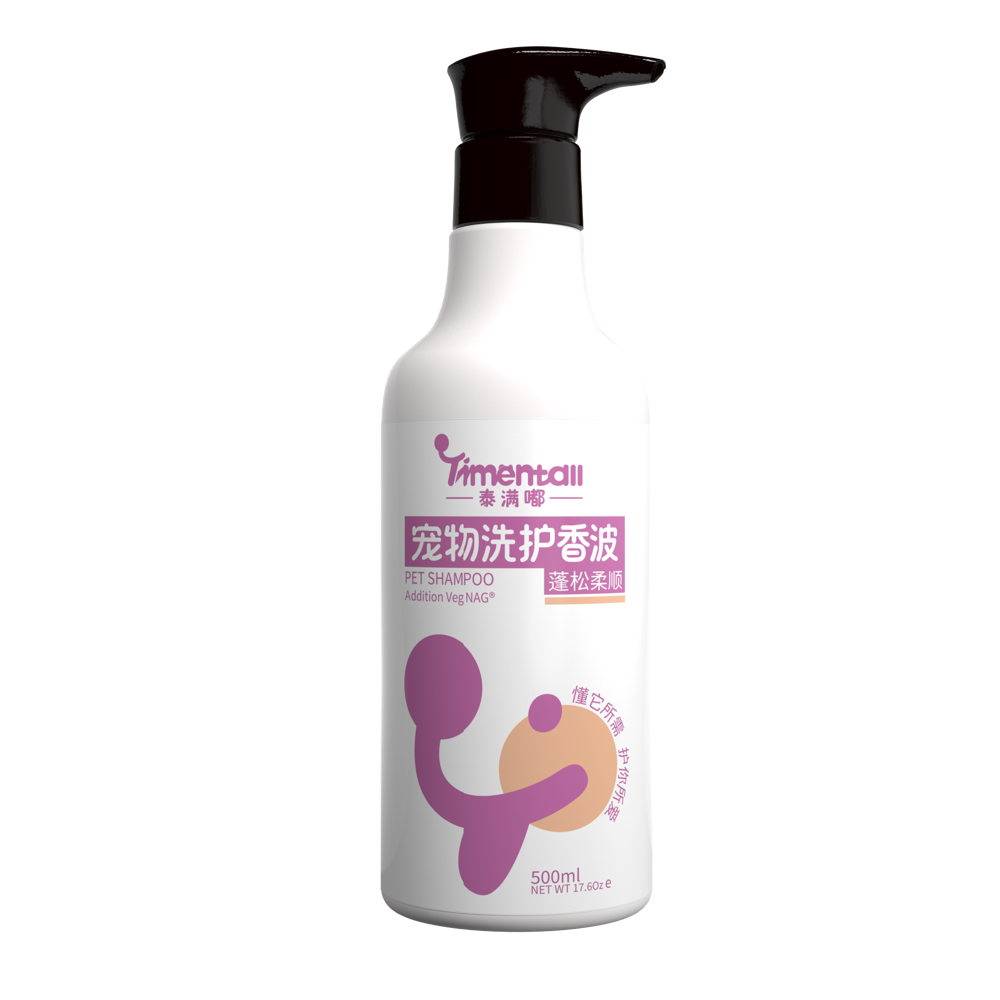
Record the exact product and pack, the original ratio and its definition, the hand-wash or equipment setting, and the intended preparation amount. Ask the supplier about unclear wording before measuring. Another product’s pump count is not a substitute.
Use the measuring tools and preparation method required by the product and equipment guidance. Before increasing product quantity, review wetting, sectional application and rinsing. Lather alone does not establish cleaning performance.
Follow the whole preparation and finishing method
Prepare, mix and apply as directed for that product. Do not transfer a shampoo ratio to a rinse-off conditioner or an environmental cleaner. Check massage, contact, rinsing and equipment-cleaning instructions separately.
Prepare everyday diluted working solution for immediate use rather than assuming it can be stored. Clean and dry tools as directed, and do not share circulating working solution between pets. Follow any specific product and equipment requirements.
For a salon brief, describe the operating conditions
A useful record includes the label version, washing method, measuring convention and finishing steps. Recheck when the product, equipment or label changes.
For private-label development, describe the proposed routine and preparation wording to be evaluated. Formula, packaging and volume require project confirmation; this article specifies neither an MOQ nor a lead time.
Sources and scope
The ratio examples explain definitions and nominal parts, not recommended product dilutions. Actual use follows the current product and equipment directions.
Compiled by Timentall. Referenced organizations do not thereby endorse the brand or its products.
Explore the related care.
Product-use questionsTimentall wholesale and salon partnerships
Developing your own brand? Discuss an OEM brief
Ma’anshan Tiantai Biotechnology Co., Ltd. provides an OEM/ODM inquiry route. Describe the category, destination and experience to evaluate. Formula, packaging, volume, samples and document scope require project confirmation.
Explore OEM/ODM →Manufacturing and applicable documents →KEEP EXPLORING
Keep the routine connected.
Rinse-off conditioner or leave-in grooming spray: follow the complete method
“After washing” is only a position in the routine. Application and finishing instructions still matter.
Read next →Cleaning, deodorizing or fragrance: which one?
Identify the litter box, shared area or local space first, then check the material and directions.
Read next →