
THE CARE JOURNAL
Drying a dog’s coat: check the roots and the dog’s response
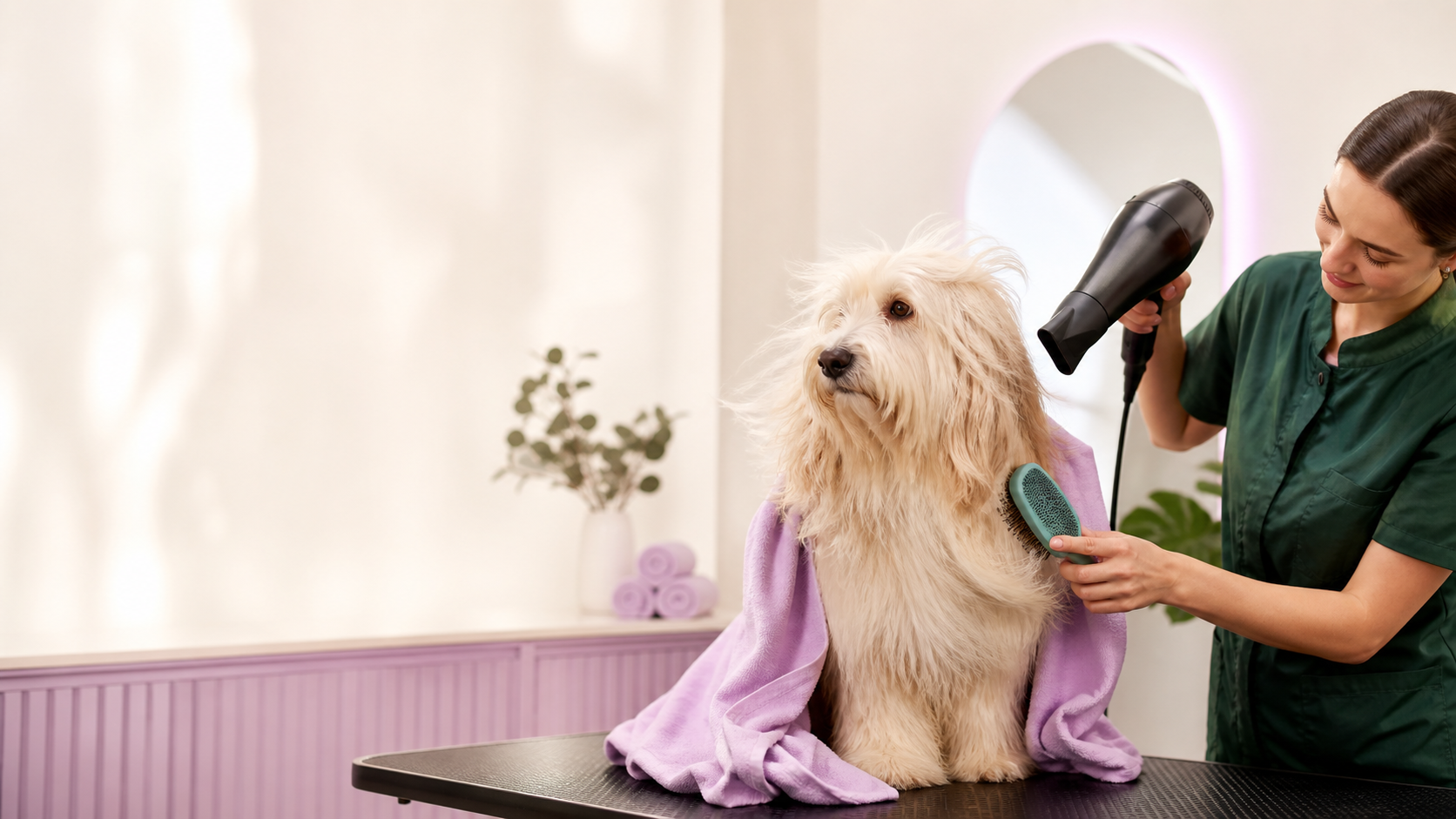
A fluffy surface and a dryer setting cannot replace sectional inspection and continuous supervision.Care illustration, not a clinical case or test result.
Coat drying involves both the coat and the individual dog. No temperature, distance or duration in this article applies universally to all dryers or pets. Follow the equipment instructions and adapt to the actual situation.
Look beneath the surface rather than making one quick pass
When the dog is secure and comfortable with handling, gently part a small section of hair and observe nearer the roots. Compare the outer coat with the layers beneath for areas needing further attention. Do not pull, scratch or use a sharp tool against the skin.
A cool sensation does not by itself establish wetness, and a warm outer layer does not prove the inside is dry. Consider the observation, equipment use and the dog’s response together; seek experienced help when uncertain.
Change position and inspect sheltered areas
Checking the back alone does not complete the job. Review both sides and sheltered areas as the dog tolerates handling. Move yourself where possible rather than forcing limbs into position.
Where a section remains wet, address that area only under suitable equipment conditions and while the dog remains comfortable, then recheck. Spending longer on an already checked side does not replace inspecting the other side.
Supervision continues after the settings are chosen
Read the specific equipment instructions and introduce the sound and airflow gradually. Avoid sustained concentrated heat or placing the outlet close to the skin. Your hand feeling comfortable is not proof that the dog is comfortable.
Stop the relevant work for marked fear, persistent struggling, discomfort or abnormal breathing. Seek veterinary help when signs persist or cause concern. Do not raise heat to finish on time, and do not treat this guide as a manual for an individual dryer.
Make a useful handover record
Record the actual equipment, settings used, areas inspected and the dog’s response. These describe one session; they are not universal operating parameters.
When asking a groomer or equipment specialist for help, provide the coat type, model, work already performed and specific observations. That is more useful than a general statement that the coat never dries.
Sources and scope
VCA · Preparing Your Puppy for a Lifetime of Good Hygiene
AAHA · Indoor Enrichment for Dogs
Compiled by Timentall. Referenced organizations do not thereby endorse the brand or its products.
Developing your own brand? Discuss an OEM brief
Ma’anshan Tiantai Biotechnology Co., Ltd. provides an OEM/ODM inquiry route. Describe the category, destination and experience to evaluate. Formula, packaging, volume, samples and document scope require project confirmation.
Explore OEM/ODM →Manufacturing and applicable documents →KEEP EXPLORING
Keep the routine connected.
Pet shampoo dilution: product-to-water ratio or final dilution?
Define the ratio and the intended washing method before measuring. The arithmetic below is an illustration, not a product recommendation.
Read next →Rinse-off conditioner or leave-in grooming spray: follow the complete method
“After washing” is only a position in the routine. Application and finishing instructions still matter.
Read next →